
Ask most sales teams about their biggest challenge and many won’t say lead generation, they’ll say lead management. Because getting inquiries is one thing, but managing them properly is where deals are actually won or lost.
Even today, many businesses still depend on spreadsheets, inboxes, or scattered tools to track prospects. The result? Missed follow-ups, slow responses, and confused pipelines.
This is exactly why having a structured lead management system is becoming a necessity rather than a luxury. Companies that build a clear process around how leads are captured and handled usually see better results without even increasing their marketing spend.
A good lead management software doesn’t just store contacts. It helps teams stay organized, respond faster, and understand which opportunities actually matter.
What Is a Lead Management System and Why It Matters in 2026
At its core, a lead management system is simply a smarter way to ensure no potential customer gets ignored.
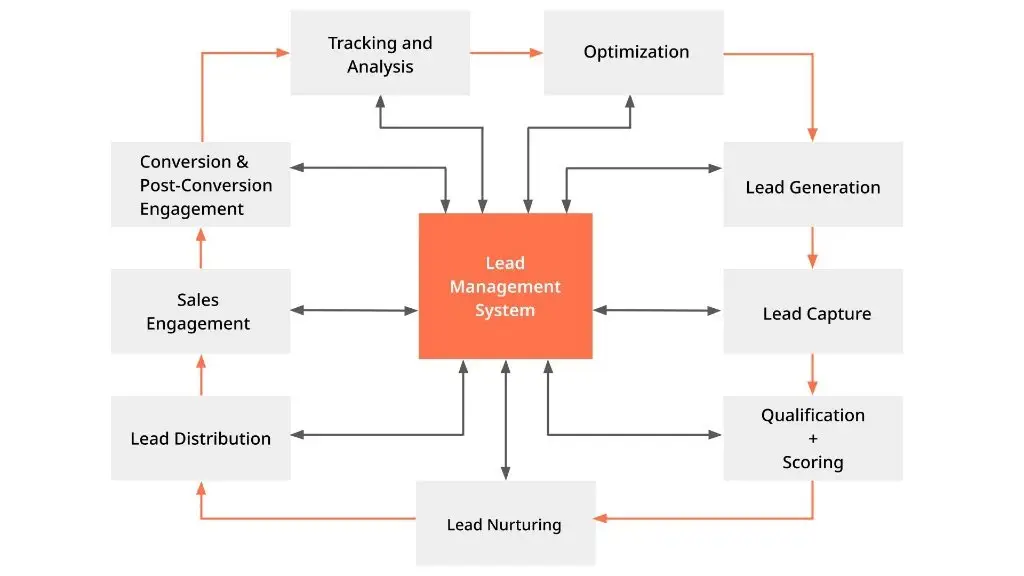
Most modern businesses now use a CRM lead management system to bring structure to how leads move from inquiry to conversion. Instead of guessing where deals stand, teams can actually see the journey.
Typically, this includes:
- Capturing leads from forms and campaigns
- Assigning leads to the right sales person
- Tracking conversations
- Setting follow-up reminders
- Monitoring deal progress
One big change in recent years is the expectation of speed. Leads expect quick responses now. If they don’t hear back, they simply move on. An automated lead management system helps prevent this by making sure every inquiry gets attention.
Interestingly, businesses that implement proper lead tracking software often find their conversion rates improve simply because they stop losing leads they already had.

Common Lead Management Challenges Businesses Face Today
Despite having good products and marketing, many companies still struggle with how they handle leads internally.
Some very common issues include:
1. Leads getting ignored unintentionally
Without a proper lead management process, it’s surprisingly easy for inquiries to sit unnoticed.
2. Follow-ups depending on memory
If reminders depend on people instead of systems, they often don’t happen.
3. Unclear ownership
Sales teams sometimes don’t know who is responsible for which lead.
4. Limited visibility for managers
Without structured lead pipeline management, forecasting becomes guesswork.
5. Too much manual updating
Salespeople should be selling, not updating sheets all day.
This is why more companies are slowly shifting toward structured sales lead management software that removes these everyday inefficiencies.
5 Practical Ways to Implement an Effective Lead Management System
Improving your business lead management system doesn’t always require complex change. Often it’s about introducing small discipline improvements supported by the right tools.
1. Stop Letting Leads Live in Different Places
When leads are spread across email, forms, and chat tools, things get messy fast. A central digital lead management platform immediately brings clarity.
2. Remove Manual Lead Distribution
Manually assigning leads may seem manageable at first, but it doesn’t scale. An automated lead management system makes sure leads go to the right person instantly.
3. Accept That Not Every Lead Is Ready
Some prospects are researching. Others are ready. Treating them the same wastes effort. This is where lead nurturing software helps maintain contact without overwhelming sales teams.
4. Make Your Pipeline Visible
Even a simple structured funnel improves discipline. Strong lead pipeline management makes it easier to see what’s moving and what’s stuck.
5. Actually Use Your Data
Most companies collect sales data but don’t use it. Good lead management tools help identify patterns like where deals slow down or what converts best.
Many growing businesses rely on Alphaware’s lead management solution to simplify the fundamentals first like lead capture, smart distribution, and tracking, before scaling their sales processes with more advanced automation.

Key Features Every Modern Lead Management Software Should Include
When choosing lead management software, the question shouldn’t be how many features, but which features actually help sales teams.
Some things that really matter:
1. Automatic lead capture
A system should collect leads without manual entry.
2. Workflow automation
Routine tasks should not depend on memory.
3. Interaction tracking
Sales teams should know what conversations already happened.
4. Simple reporting
If reports are hard to read, they won’t be used.
5. CRM connectivity
A good CRM lead management system should connect marketing and sales activities naturally.
Alphaware provides a lead management system built for practical, day-to-day sales operations, helping businesses move beyond complicated software and focus on tools that actually improve lead tracking and conversions.
Benefits of Using a Lead Management System for Your Business
The biggest benefit of a structured lead management solution is not technology, it’s clarity.
Some practical improvements businesses usually notice:
1. Better conversion discipline
Leads don’t get forgotten.
2. More selling time
Less admin work means more conversations.
3. Improved first impressions
Faster responses build trust early.
4. Better decision making
A clear lead management system shows what channels actually perform.
5. Growth without chaos
As leads increase, structure becomes essential.
Many growing companies now adopt platforms like Alphaware not just for organization, but because structured lead workflows make scaling sales teams much easier.
How to Choose the Right Lead Management Solution for Your Business
There is no perfect lead management software for everyone. The best choice is usually the one your team will actually use consistently.
Some practical evaluation points:
Is it easy to use?
If adoption is difficult, the tool will fail.
Can it match your process?
Your workflow shouldn’t need to change drastically.
Does it integrate easily?
Your lead tracking software should connect with existing tools.
Does it actually save time?
Automation should reduce work, not add it.
Will it still work when you grow?
Scalability matters more than most companies think.
The right lead management solution should quietly improve how your team works rather than forcing dramatic process changes.
Ready to Transform Your Lead Management Process in 2026?
Sales success often comes down to consistency. The businesses that respond quickly, track properly, and follow up consistently usually outperform competitors with similar products.
A structured lead management system helps businesses:
- Stay organized
- Improve response speed
- Track opportunities clearly
- Improve conversions
- Build a predictable pipeline
This is exactly why many organizations are exploring platforms like Alphaware, which focuses on simplifying how businesses capture, manage, and convert leads through practical automation and workflow structure.
If improving lead conversions is a priority this year, investing in a smarter system might be one of the highest impact changes you can make.